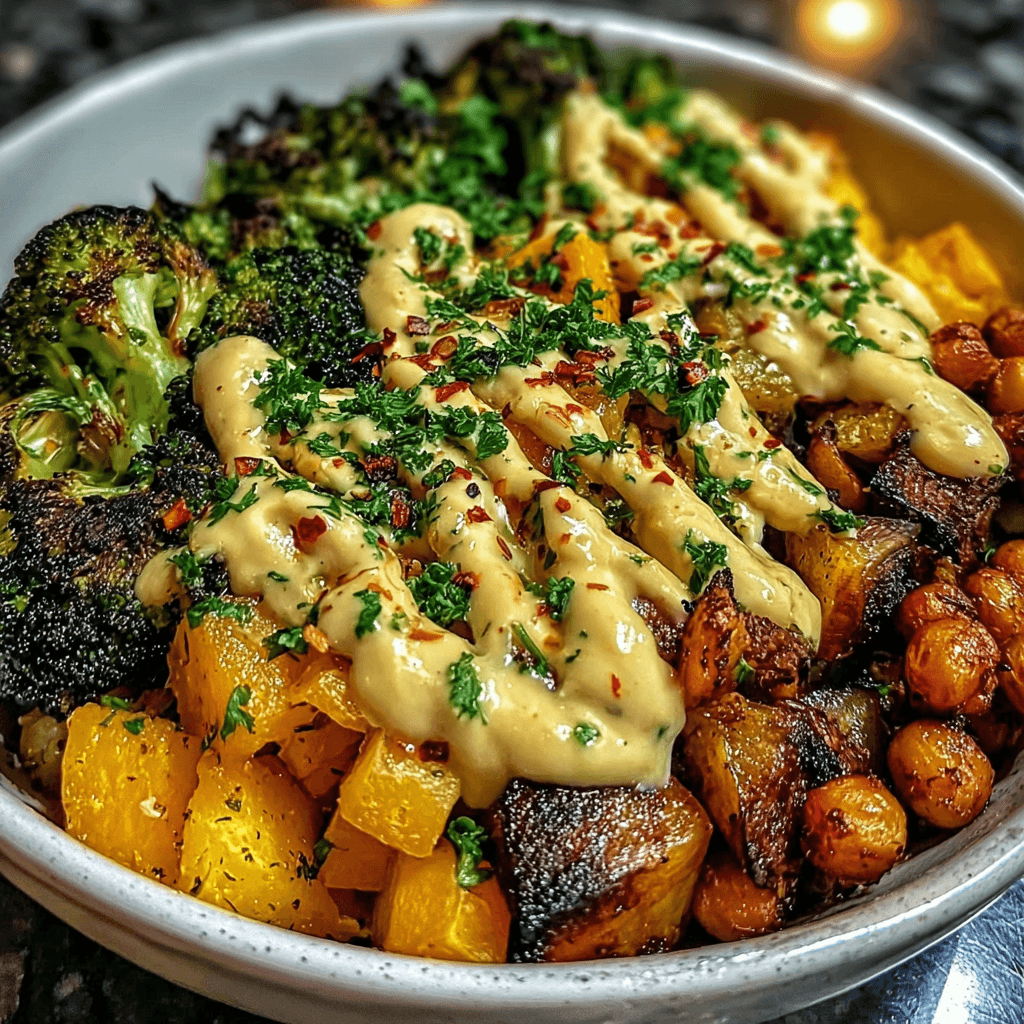
I set off the smoke alarm twice while trying to roast the vegetables. Twice. I forgot about both pans while helping Ben with his spelling words and walked back to a pure kitchen disaster. Mia wandered in, sniffed the smoky air, and announced, “Something smells like school lunch. ” That was not a compliment. Once I figured it out, these roasted vegetable bowls healthy enough for any weeknight, became everything.
Why This Recipe Is Special
Here is the thing nobody tells you about roasted vegetables: when you get them right, even the kids who make dramatic gagging sounds at the word “broccoli” will eat them without complaint. Ben, my nine-year-old, once described these bowls as “actually pretty good for something healthy,” which in our house is a standing ovation. This recipe is filling, flexible, and genuinely one of the best ways I know to get a real vegetable-focused dinner on the table without spending an hour in the kitchen.
How To Make Roasted Vegetable Bowls Healthy
My first real successful attempt happened on a Tuesday in January when I was determined to stop ordering delivery. I had Mia sitting on the counter eating a handful of raw chickpeas straight from the can (she does this; I have accepted it) and Ben reading the ingredient list over my shoulder like a tiny food critic. When the first tray came out of the oven smelling like golden caramelized edges and warm spices, Mia slid off the counter and pressed her nose up to the pan. “Can I eat just the potatoes?” she asked. Reader, she ate the broccoli too.
The big lesson from my burnt-vegetable disaster days was simple: do not crowd the pan. I used to pile everything onto one baking sheet thinking it would save time, and what I got instead was sad, steamed vegetables sitting in their liquid. Spread them out, give them space, and let the oven do its job. Two sheet pans, side by side, changed everything. Ben now calls himself the “spreader,” which mostly means he arranges the vegetables with the focused intensity of someone doing surgery.
Main Ingredients
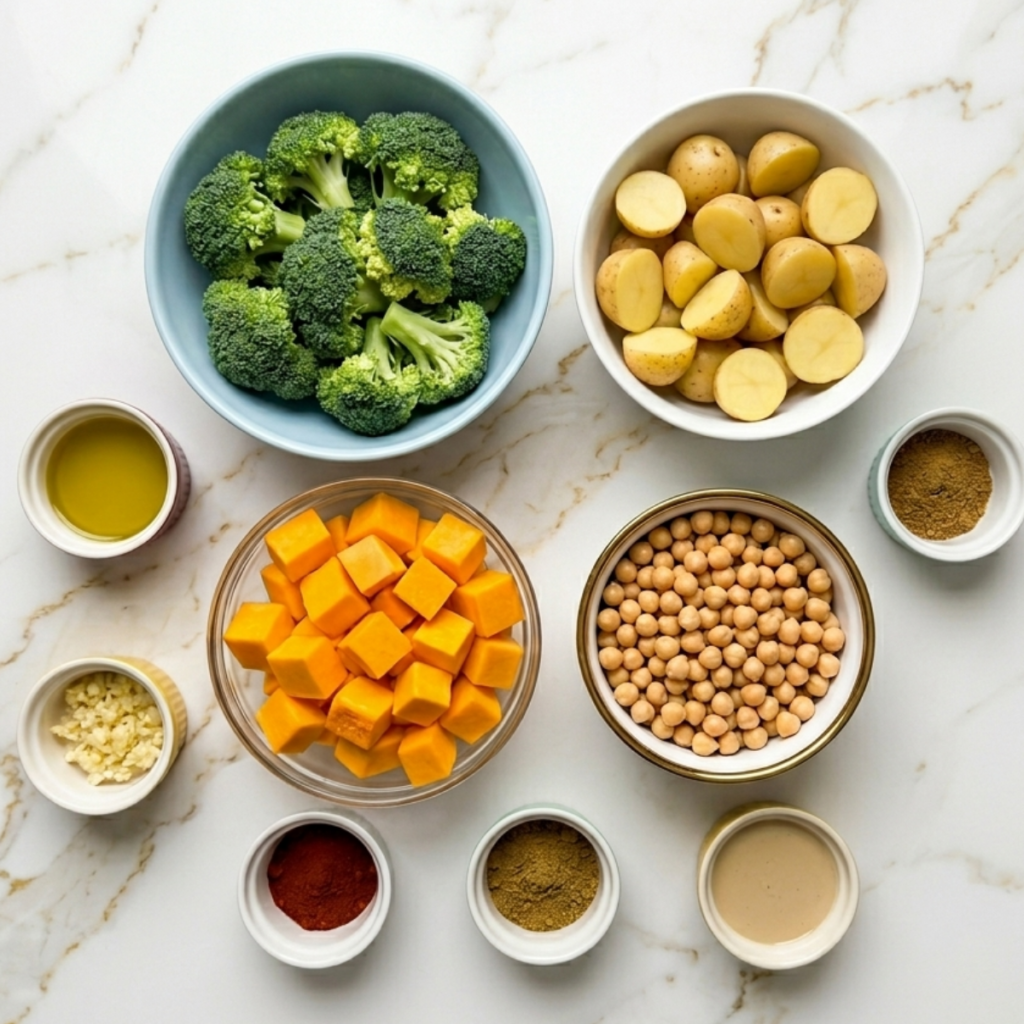
- 2 cups broccoli florets – Gets beautifully crispy at the edges; cut them similar in size so they roast evenly
- 2 cups baby potatoes, halved – The golden, crispy base of the bowl; creamy inside, caramelized outside
- 1.5 cups butternut squash, cubed – Adds natural sweetness and gorgeous color; cut into 3/4-inch pieces
- 1 cup chickpeas, drained and dried – Your protein hero: they turn irresistibly crunchy in the oven
- 3 tablespoons olive oil – Coats everything evenly and helps achieve that golden roast
- 1 teaspoon garlic powder – Warm, savory backbone for the whole bowl
- 1 teaspoon smoked paprika – Gives everything that deep, slightly smoky color and flavor
- 1/2 teaspoon cumin – Earthy warmth that ties all the vegetables together
- Salt and black pepper to taste – Season generously; vegetables need more salt than you think
- For the tahini drizzle: 3 tablespoons tahini – Nutty, creamy, and the sauce that makes this bowl feel complete
- 2 tablespoons lemon juice – Brightens the tahini and cuts through the richness
- 1 tablespoon olive oil – Loosens the sauce to a drizzleable consistency
- 2 to 3 tablespoons warm water – Thins the tahini sauce to just the right pourable texture
- Fresh parsley, chopped – For garnish; adds color and a clean, fresh finish
- Red pepper flakes – Optional, for a little heat on top
Step-by-Step Instructions
Step 1: Prep and Season the Vegetables
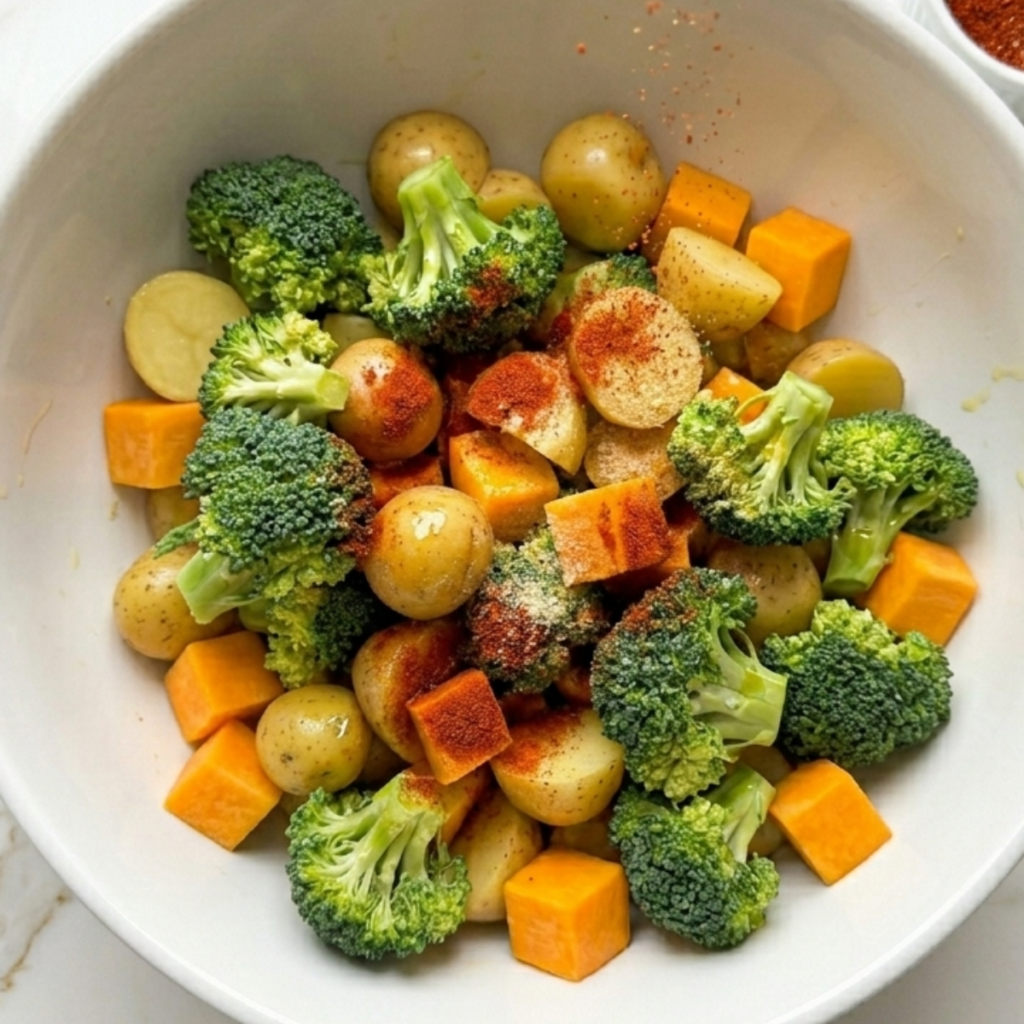
- Preheat your oven to 425 degrees F and line two large baking sheets with parchment paper
- Pat the chickpeas completely dry with paper towels; moisture is the enemy of crunch
- Toss the broccoli, potatoes, squash, and chickpeas separately with olive oil, garlic powder, smoked paprika, cumin, salt, and pepper
- Keep the chickpeas on their own section of the pan since they roast faster than the root vegetables
Step 2: Roast the Vegetables
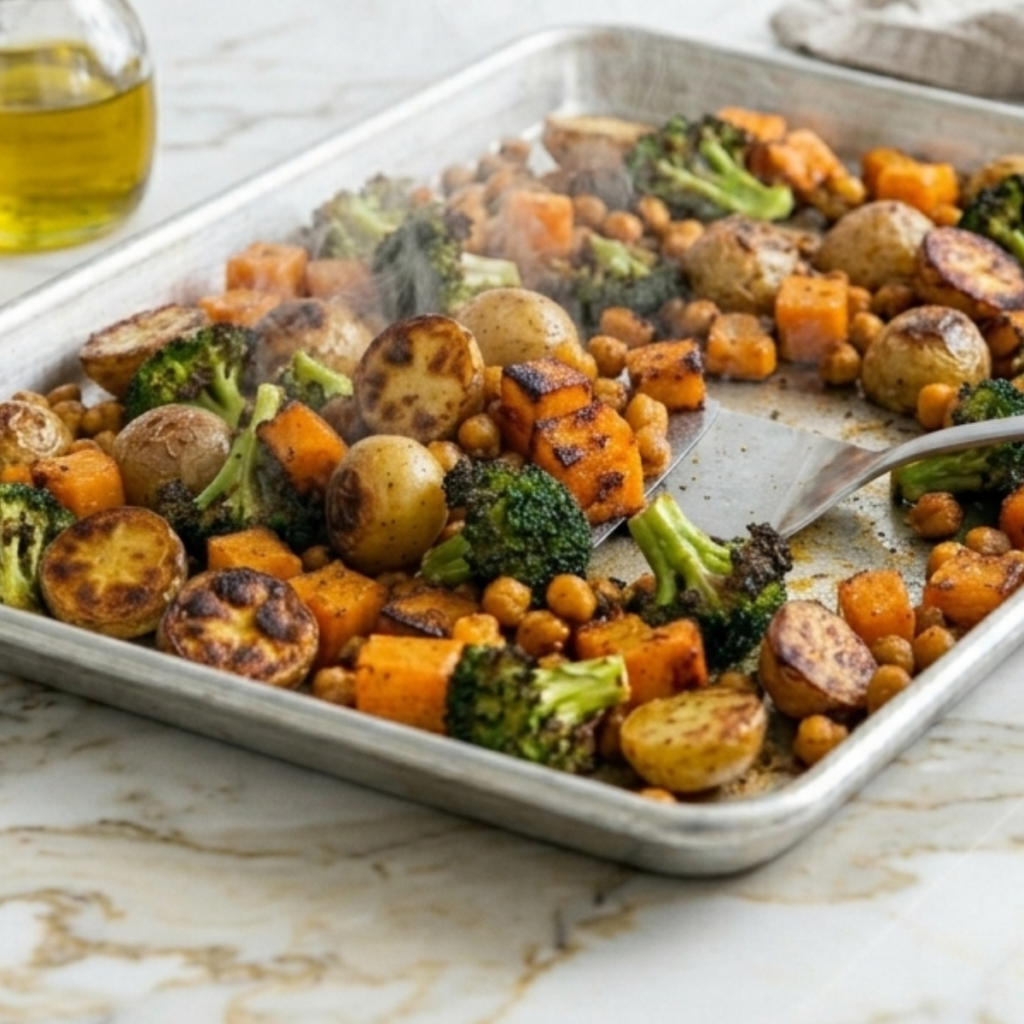
- Spread everything across two baking sheets in a single layer with space between each piece
- Place potatoes and squash on one pan, broccoli and chickpeas on the second pan
- Roast at 425 degrees F for 25 to 30 minutes, flipping everything once halfway through
- Remove the broccoli and chickpeas at 20 to 22 minutes if they are browning faster than the root vegetables
Step 3: Make the Tahini Sauce
- Whisk together the tahini, lemon juice, and olive oil in a small bowl until smooth
- Add warm water one tablespoon at a time, whisking between each addition until the sauce is pourable but not thin
- Taste and adjust with a pinch of salt or extra lemon juice to your preference
- Set aside at room temperature; the sauce will thicken slightly as it sits so keep the warm water nearby
Step 4: Assemble the Bowls
- Start with a base of your choice: cooked grains, leafy greens, or simply the roasted potatoes as the foundation
- Layer the roasted broccoli, squash, and crispy chickpeas over the top
- Drizzle the tahini sauce generously across everything in a slow zigzag
- Finish with fresh parsley and a pinch of red pepper flakes, and serve immediately while everything is still warm
Roasted Vegetable Bowls Healthy Variations
Ben’s “Make It a Grain Bowl” Version
Ben went through a phase where everything had to have quinoa in it after he learned it was a “complete protein” from a school project. He told me the news very seriously while pointing at the bag like a tiny nutritionist. For a heartier bowl that keeps hungry kids full through homework and after-school activities, serve everything over a cup of cooked quinoa or brown rice. The grains soak up the tahini sauce in the most satisfying way and turn this into a real meal-prep-with-lots-of-veggies situation for the week ahead.
Mia’s “Everything Crispy” Bowl
Mia has one rule in life: texture matters. She will reject anything soft, mushy, or what she calls “too wet.” For the crunch-obsessed members of your household, double the chickpeas, add a handful of pumpkin seeds to the pan in the last five minutes of roasting, and swap the tahini drizzle for a lemon-herb yogurt sauce instead. Everything gets that satisfying crunch that makes Mia eat her vegetables without a single negotiation.
The “Clean Out the Fridge” Sunday Version
This is honestly how the recipe started. I had half a head of cauliflower, some sad carrots, and a sweet potato that was on its last good day. Everything got tossed with the same spice mix and roasted together. The rule is simple: any vegetable that can survive 425 degrees F for 25 minutes is fair game. Zucchini, bell peppers, red onion, Brussels sprouts, and green beans all work beautifully. This dish is my favorite kind of hearty vegetable meal because the recipe changes every single week.
Substitutions
Butternut squash to sweet potato: Sweet potato is actually my go-to swap when I cannot find squash. It roasts in almost the same time and has a similar natural sweetness, and Mia cannot tell the difference. Cut it into the same size cubes for even cooking.
Tahini sauce to hummus drizzle: If tahini is not something you keep on hand, thin out two tablespoons of store-bought hummus with a little lemon juice and olive oil until it is pourable. It gives you a similar creamy, savory finish with zero extra effort.
Chickpeas to white beans: White beans roast up beautifully and give you a slightly softer, creamier bite compared to the crunch of chickpeas. They are also a wonderful option if someone in your house has a texture preference. Dry them well before roasting, just like you would chickpeas.
Smoked paprika to regular paprika plus a pinch of cayenne: If you only have sweet paprika in your spice rack, add just a tiny pinch of cayenne alongside it to recreate that subtle smoky warmth. Start small since cayenne is much hotter than smoked paprika and builds quickly.
Equipment
- Two large rimmed baking sheets (half sheet pans are ideal)
- Parchment paper or silicone baking mats
- Large mixing bowl for tossing the vegetables
- Small mixing bowl for the tahini sauce
- Whisk
- Sharp chef’s knife and cutting board
- Vegetable peeler for the squash
- Paper towels for drying the chickpeas
- Measuring spoons
- Tongs or a wide spatula for flipping
- Timer (non-negotiable after my two-pan smoke alarm situation)
Storage Tips
Make Ahead
- Chop all your vegetables up to two days ahead and store them in separate airtight containers in the fridge
- The tahini sauce can be made three days in advance; store it in a sealed jar and whisk in a splash of warm water before serving to loosen it back up
- This recipe is one of the best veggie food prep options out there; roast a double batch on Sunday and you have four days of easy lunches sorted
Refrigerator
- Store roasted vegetables in an airtight container in the fridge for up to 4 days
- Keep the tahini sauce in a separate container so it does not make the vegetables soggy
- The chickpeas will soften over time in the fridge, so re-crisp them in a dry skillet for two minutes before serving if you want that crunch back
Freezing
- Roasted potatoes and squash freeze reasonably well for up to 6 weeks in a freezer-safe bag
- Broccoli and chickpeas do not freeze well after roasting because they lose their texture completely, so freeze those components raw instead
- Do not freeze the tahini sauce; make it fresh each time since it takes less than three minutes
Reheating
- The best way to reheat roasted vegetables is back in the oven at 400 degrees F for 8 to 10 minutes so they crisp back up
- Microwave reheating works in a pinch but the vegetables will be softer; spread them on a plate in a single layer and heat in 60-second bursts
- A hot skillet with a tiny drizzle of olive oil for two to three minutes brings back a lot of the original roasted texture and flavor
Family Secret Worth Sharing
My mom always said the difference between good roasted vegetables and great ones is what you do in the last five minutes. She would pull the pan out just before everything was done, drizzle a tiny bit of honey over the squash and carrots, and slide it back in for one final burst. The sugars caramelize just enough to turn those last few minutes into something magical. I tried it once on a whim while Ben was watching, and he grabbed a piece of squash straight off the hot pan, burned his fingers, and said it was “worth it.” My mom would have loved that kid.
Troubleshooting FAQs
Why are my roasted vegetables coming out soggy instead of crispy?
Three things cause soggy vegetables every time: a crowded pan, too much oil, or vegetables that were not dried properly. Make sure every piece has space around it, use just enough oil to lightly coat each piece, and if you washed the vegetables before roasting, dry them thoroughly. Even a little surface moisture steams the vegetables instead of letting them roast.
My chickpeas are not getting crunchy. What am I doing wrong?
The number one culprit is moisture. Canned chickpeas need to be drained, rinsed, and then patted aggressively dry with paper towels. Spread them on the pan with space around each one and do not stir them too often; let them sit and develop a crust. Some brands of canned chickpeas are waterlogged and may need an extra five minutes in the oven.
Can I use frozen vegetables instead of fresh?
You can, but they need one extra step. Spread the frozen vegetables on a baking sheet and let them thaw at room temperature for 20 minutes, then blot dry with paper towels before tossing with oil and spices. Frozen vegetables carry a lot of extra moisture that will steam everything if you put them in the oven straight from the bag.
The tahini sauce seized up and turned into a paste. How do I fix it?
This happens to everyone the first time, and it is completely normal. Tahini thickens dramatically when it first meets acid like lemon juice. Keep whisking and add warm water one tablespoon at a time, whisking between each addition. It will loosen up into a smooth, creamy sauce. Cold water makes it seize even more, so always use warm.
A Bowl Full of Good and a Kitchen Full of Noise
These days, Tuesday night in our kitchen smells like smoked paprika and toasted chickpeas, and I genuinely could not be happier about it. Mia picks out the squash and eats it first. Ben arranges his bowl in sections so nothing touches, which tells you everything you need to know about him. This has become one of our favorite low fat veggie recipes that actually satisfies everyone at the table, right alongside the other roasted vegetables dinner meals we rotate through the week. Whenever someone asks me what to eat with roasted vegetables, I always say: make it a bowl, add a good sauce, and do not underestimate how much a little crunch changes everything. These are the kinds of hearty vegetable meals that make you feel like you are genuinely taking care of your family, one messy, noisy, wonderful Tuesday at a time.
Don’t forget to snap a picture of your roasted vegetable bowls healthy before that… (trust me, it will disappear quickly!), and leave a rating below. We’d love to hear how this roasted vegetable bowls healthy recipe becomes part of your family dinner story.
Star rate this recipe and join our warm kitchen family.