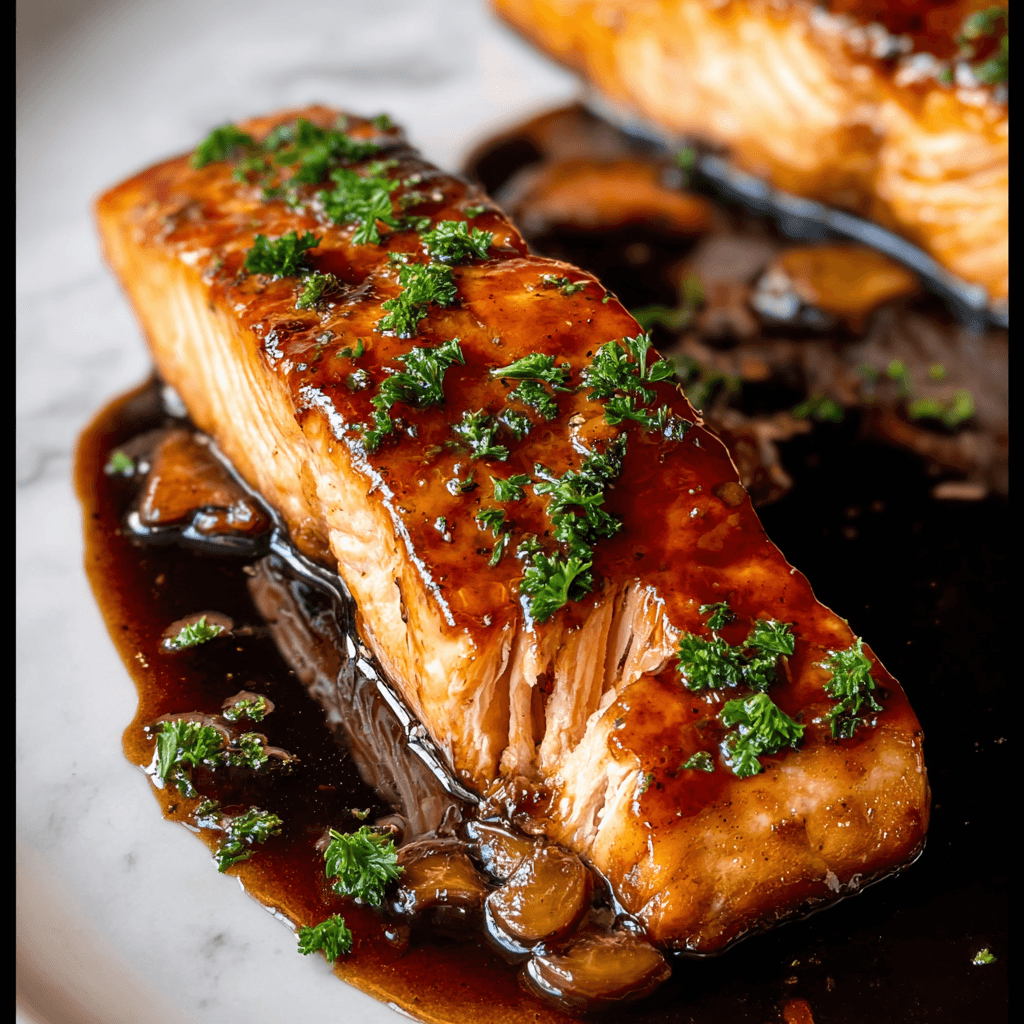
The first time I made this, I flipped the salmon too early and left the entire golden crust stuck to my skillet. Ben stared at his plate and said, “Is it supposed to look like that?” It was definitely not. But after a little trial and a lot of butter, this brown sugar glazed salmon came out sticky, caramelized, and absolutely worth every previous failure.
Why This Recipe Is Special
Salmon is one of those things that sounds impressive but is genuinely one of the fastest dinners you can pull off on a weeknight. The brown sugar and soy glaze does something almost magical in the oven: it caramelizes into this sticky, lacquered coating that looks like you spent hours in the kitchen when really you spent about thirty minutes including the part where Mia reorganized your spice drawer without being asked. This is the recipe I make when I want dinner to feel like a little event without it actually being one.
How To Make Brown Sugar Glazed Salmon
My successful version happened on a Friday night when both kids were hovering at the kitchen counter like little vultures. Mia had appointed herself the official glaze taster and kept dipping her finger into the sauce bowl every time I turned around. Ben was reading the back of the brown sugar bag out loud. This behavior is not helpful, but it is very characteristic of him. When that first wave of caramelized sugar and garlic hit the oven air, they both went completely silent. That kind of quiet only happens when something smells really, really excellent
The lessons that changed everything were patience and health. I used to rush the sear, moving the fish around before it was ready to be released. Salmon tells you when it is done on the bottom: it will lift cleanly from the pan without any resistance. The moment you have to force it, it is not ready. Once I stopped poking and prodding, the crust formed perfectly, and the glaze had something solid to cling to. Ben now calls himself the “official timer keeper,” which means he stands at the oven door, counting down with tremendous authority.
Main Ingredients
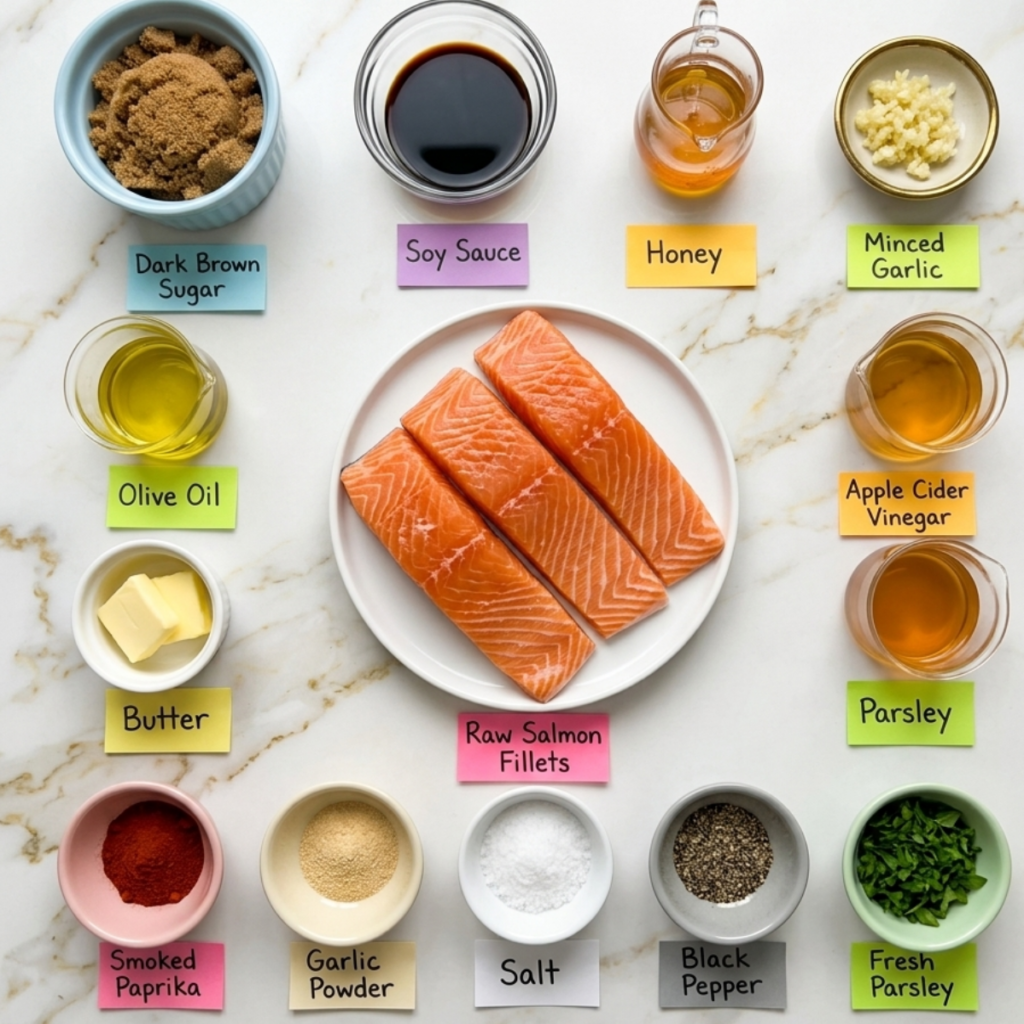
- 4 salmon fillets (6 oz each), skin-on – Skin-on keeps the fish together during cooking and crisps up beautifully underneath
- 3 tablespoons brown sugar, packed – The star of the glaze; dark brown sugar gives a deeper, more molasses-rich flavor than light
- 2 tablespoons soy sauce – Brings saltiness and umami that balances the sweetness perfectly
- 1 tablespoon honey – Adds shine and helps the glaze stick and caramelize without burning
- 3 cloves garlic, minced – Non-negotiable; the garlic blooms in the glaze and gives the whole dish its savory backbone
- 1 tablespoon olive oil – For searing; gets the pan hot enough for a proper crust
- 1 tablespoon butter – Added at the end for richness and that glossy restaurant finish
- 1 teaspoon smoked paprika – Warm, subtle smokiness that complements the sweet glaze beautifully
- 1/2 teaspoon garlic powder – Layered garlic flavor alongside the fresh; makes the seasoning more complex
- 1/4 teaspoon black pepper – Freshly ground; a little heat to cut through the sweetness
- 1/4 teaspoon salt – Season the fish itself before the glaze goes on
- 1 teaspoon apple cider vinegar – Brightens the glaze and stops it from being one-dimensionally sweet
- Fresh parsley, chopped – For garnish; adds a clean green finish against that deep caramel color
Step-by-Step Instructions
Step 1: Make the Glaze and Season the Salmon
- Whisk together the brown sugar, soy sauce, honey, minced garlic, and apple cider vinegar in a small bowl until the sugar is mostly dissolved
- Pat the salmon fillets completely dry on both sides with paper towels; dry fish sears instead of steams
- Season the flesh side of each fillet with smoked paprika, garlic powder, salt, and black pepper
- Set the glaze and seasoned salmon side by side near the stove so everything is ready when the pan gets hot
Step 2: Sear the Salmon
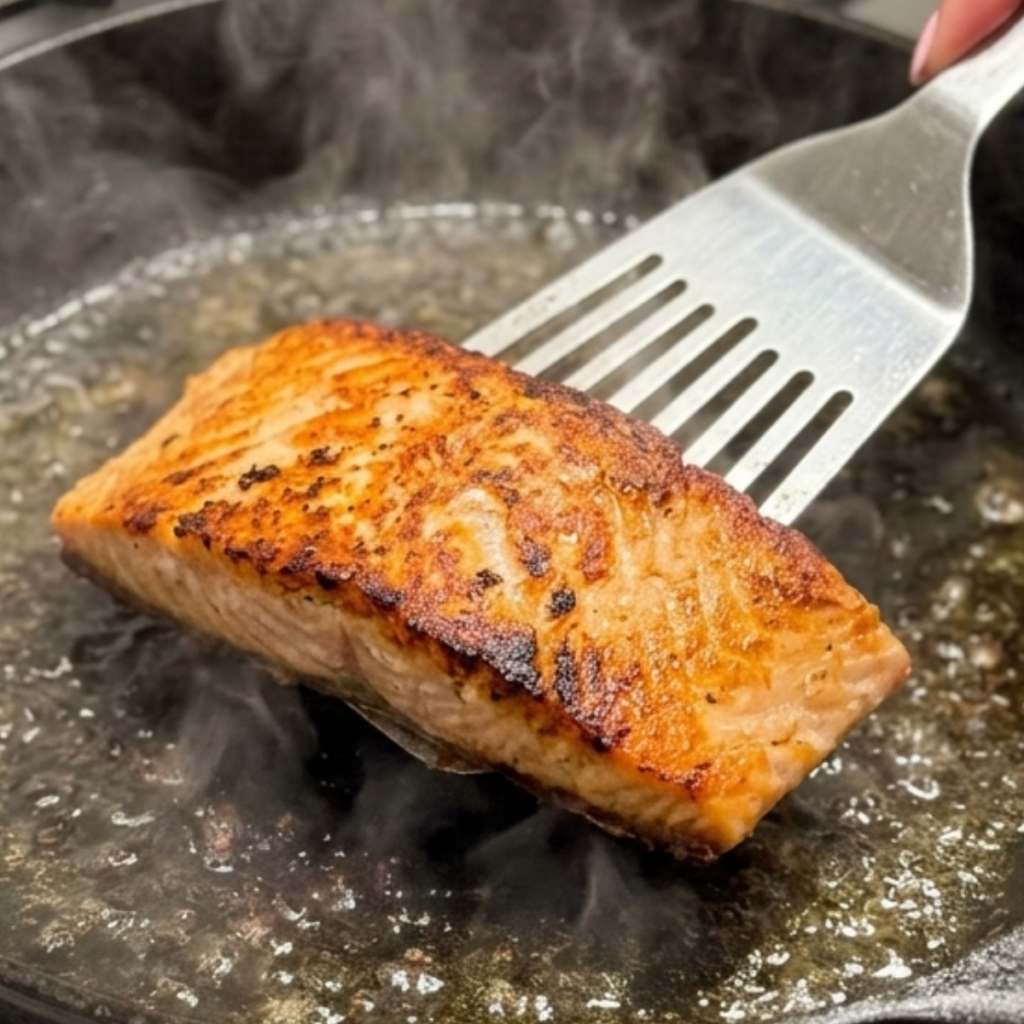
- Heat the olive oil in an oven-safe skillet over medium-high heat until the oil is shimmering and just beginning to smoke
- Place the salmon fillets flesh-side down in the pan and cook for 3 minutes without moving them at all
- Flip the fillets gently once they release cleanly from the pan; if they resist, give them another 30 seconds
- Cook for another 2 minutes on the skin side until the skin is golden and beginning to crisp
Step 3: Glaze and Bake
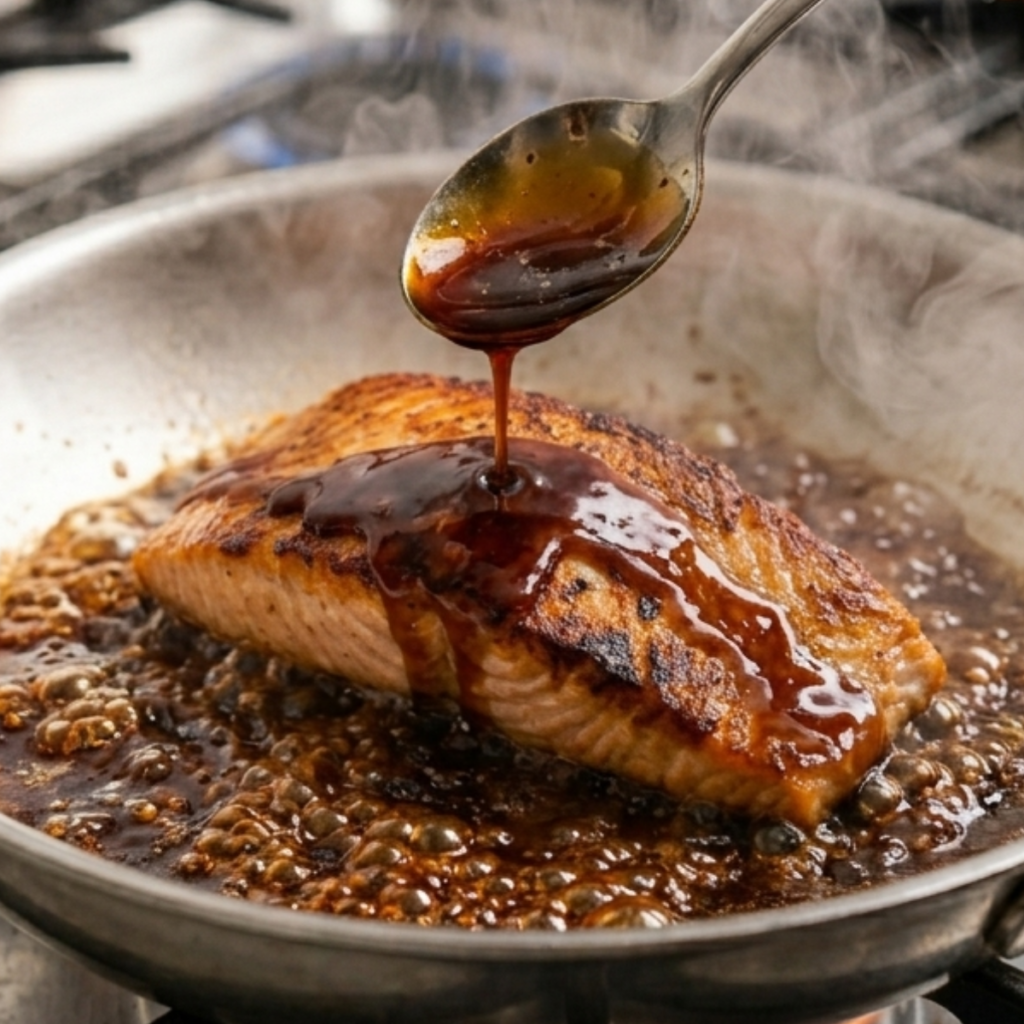
- Spoon the brown sugar glaze generously over each fillet while the skillet is still on the stovetop, coating the tops and sides well
- Transfer the whole skillet directly into a preheated 400 degree F oven and bake for 3 to 4 minutes
- Pull the pan out halfway and spoon the remaining glaze over each fillet for that second caramelized layer
- Return to the oven for another 3 to 4 minutes until the glaze is bubbling, sticky, and deeply caramelized
Step 4: Rest and Serve
- Let the salmon rest in the pan for 2 minutes before serving so the juices redistribute and the glaze sets slightly
- Use a wide spatula to lift each fillet carefully and transfer to serving plates with the caramelized side facing up
- Spoon any remaining pan glaze over the top of each piece for maximum flavor and shine
- Finish with freshly chopped parsley and serve immediately while the glaze is still warm and glossy
Brown Sugar Glazed Salmon Variations
Mia’s “Make It Sweeter” Version
Mia has a serious sweet tooth, and the moment she tasted the original glaze, she asked if we could add more honey. We could, and we did. For a sweeter, more dessert-adjacent glaze that kids absolutely lose their minds over, increase the honey to 2 tablespoons and add a small pinch of cinnamon to the mix. It gives the whole thing a warmth that Mia describes as “cozy salmon,” which is genuinely the best product description I have ever heard. Serve it over white rice and watch it disappear.
Ben’s “Spicy Brown Sugar” Version
Ben went through his spicy phase at age eight and never fully came out of it. For those who like a little heat against that sweet glaze, add half a teaspoon of sriracha and a pinch of red pepper flakes directly into the glaze mixture before spooning it over the salmon. The heat builds slowly underneath all that sweetness and turns this into a genuinely grown-up version of the dish. Ben adds extra red pepper flakes to his own plate, always, and then immediately reaches for his water glass.
The Sheet Pan Sunday Version
On the Sundays when I do not want to deal with a hot skillet and oven transfer, I skip the sear entirely and go straight to a lined sheet pan. Brush the fillets with a little oil, season them, spoon the glaze over the top, and bake at 425 degrees F for 12 to 14 minutes. You lose a little of that deep stovetop crust, but the glaze still caramelizes beautifully, and the cleanup takes about forty-five seconds. Both kids can help line the pan and spoon the glaze, which means dinner becomes a group project.
Substitutions
Brown sugar to maple syrup: Pure maple syrup makes a genuinely beautiful swap here. Use 2 tablespoons in place of the 3 tablespoons of brown sugar since maple syrup is slightly sweeter and more liquid. The flavor is a little earthier and less molasses-forward, but the caramelization is just as gorgeous in the oven.
Soy sauce to tamari or coconut aminos: Tamari is the easiest gluten-free swap with an almost identical flavor. Coconut aminos are sweeter and less salty, so reduce the honey by half a teaspoon if you go that route. Both work beautifully in the glaze without changing the overall balance much.
Fresh garlic to garlic powder: If you are out of fresh garlic, use 1 teaspoon of garlic powder in the glaze instead of the 3 minced cloves. The flavor is less sharp and more mellow, which actually works well for kids who find raw garlic a little strong. The dish still tastes deeply savory and completely intentional.
Salmon to trout or arctic char: Both trout and arctic char have a similar fat content and mild flavor to salmon and respond beautifully to this glaze. Trout fillets tend to be thinner, so reduce the oven time to 4 to 5 minutes and watch closely. The brown sugar glaze works on any rich, fatty fish that can handle high heat without drying out.
Equipment
- Oven-safe skillet (cast iron or stainless steel, 12-inch)
- Small mixing bowl for the glaze
- Whisk or fork for mixing the glaze
- Paper towels for drying the salmon
- Wide fish spatula for flipping and serving
- Tongs (optional but helpful for positioning fillets)
- Measuring spoons
- Oven mitts (the skillet handle will be extremely hot coming out of the oven)
- Basting spoon or pastry brush for applying the glaze
- Instant-read thermometer (salmon is done at 125 to 130 degrees F for medium)
Storage Tips
Make Ahead
- The brown sugar glaze can be made up to 3 days in advance and stored in a sealed jar in the fridge; give it a good stir before using since the sugar may settle
- Season the salmon fillets the night before and keep them covered in the fridge for up to 24 hours before cooking
- Do not glaze the salmon ahead of cooking; the sugar draws moisture out of the fish and can make the texture soft before it even hits the pan
Refrigerator
- Store leftover cooked salmon in an airtight container in the fridge for up to 3 days
- The glaze firms up when cold and turns into a beautiful sticky coating on the fish; it is honestly delicious cold over a salad the next day
- Keep leftover pan sauce in a separate small container and drizzle it over the reheated salmon before serving
Freezing
- Cooked glazed salmon can be frozen for up to 1 month wrapped tightly in plastic wrap and then placed in a freezer bag
- The texture changes slightly after freezing but the flavor holds up remarkably well, especially flaked into pasta or rice bowls
- Raw salmon fillets freeze beautifully for up to 3 months; thaw overnight in the fridge before seasoning and cooking
Reheating
- Reheat leftover salmon gently in a covered skillet over low heat with a splash of water to prevent the glaze from burning
- Oven reheating at 275 degrees F for 10 to 12 minutes keeps the fish moist and warms it through without overcooking
- Microwave reheating works in a pinch on 50 percent power in 60-second intervals; cover with a damp paper towel to hold in moisture
Family Secret Worth Sharing
My mom taught me something about glazed fish that I thought was fussy until it changed every recipe I made after: always add your glaze in two rounds. Put half on before it goes in the oven, then pull the pan out halfway through cooking and spoon the second half over the top. The first layer soaks into the fish and seasons it all the way through. The second layer stays on the surface and caramelizes into that glossy, sticky coating you see in all the pictures. Mia watched me do it once and asked why I was “painting the fish.” I told her Grandma taught me. She nodded like that explained everything, which, honestly, it did.
Troubleshooting FAQs
Why is my glaze burning in the oven instead of caramelizing?
Two things usually cause this: oven temperature too high or too much sugar in the glaze without enough liquid to balance it. Make sure your oven is at 400 degrees F and not higher for the finishing bake. If the glaze is darkening too fast, tent the pan loosely with foil for the last few minutes. A little char on the very edges is normal and delicious; black and bitter means it went too far.
My salmon is sticking to the pan when I try to flip it. What do I do?
Do not force it. This is the single most important salmon rule I know. If the fish is sticking, it is not ready to flip yet. Give it another 30 to 60 seconds and try again with a thin fish spatula. Properly seared salmon releases on its own when the crust has fully formed. A well-seasoned cast iron skillet or a hot stainless steel pan with enough oil also makes a big difference.
How do I know when the salmon is cooked through without cutting into it?
The most reliable way is an instant-read thermometer. Pull the salmon at 125 to 130 degrees F for medium, which is slightly translucent in the very center, or 145 degrees F for fully cooked. Visually, the flesh should change from deep pink to a lighter, opaque pink from the outside in. When you press the thickest part gently with your finger, it should feel firm but with a little give.
Can I make this without an oven-safe skillet?
Absolutely. Sear the salmon in any skillet you have, then transfer the fillets to a parchment-lined baking sheet, spoon the glaze over the top, and finish in the oven from there. You lose the easy pan sauce that forms in a single-skillet method, but the glazed salmon comes out just as beautiful, and the cleanup is actually easier.
Sticky Fingers, Happy Table
Friday nights in our kitchen have a new look now. Ben picks off every piece of parsley with surgical precision. Mia drags her rice through the leftover pan glaze like it is the best thing she has ever tasted, which some weeks it genuinely is. This brown sugar-glazed salmon has quietly become one of our most loved baked salmon recipes in the whole dinner rotation, sitting right alongside the other easy salmon glaze recipes we reach for when we need something that feels special on a Tuesday. If you are looking for a reliable, crowd-pleasing honey garlic brown sugar salmon that comes together in under thirty minutes and makes the whole house smell incredible, this is absolutely the one to save. Some dinners are just worth the sticky pan.
Don’t forget to snap a picture of your brown sugar-glazed salmon before that… (trust me, it will disappear quickly!), and leave a rating below. We’d love to hear how this brown sugar glazed salmon becomes part of your family dinner story.
Star rate this recipe and join our warm kitchen family.