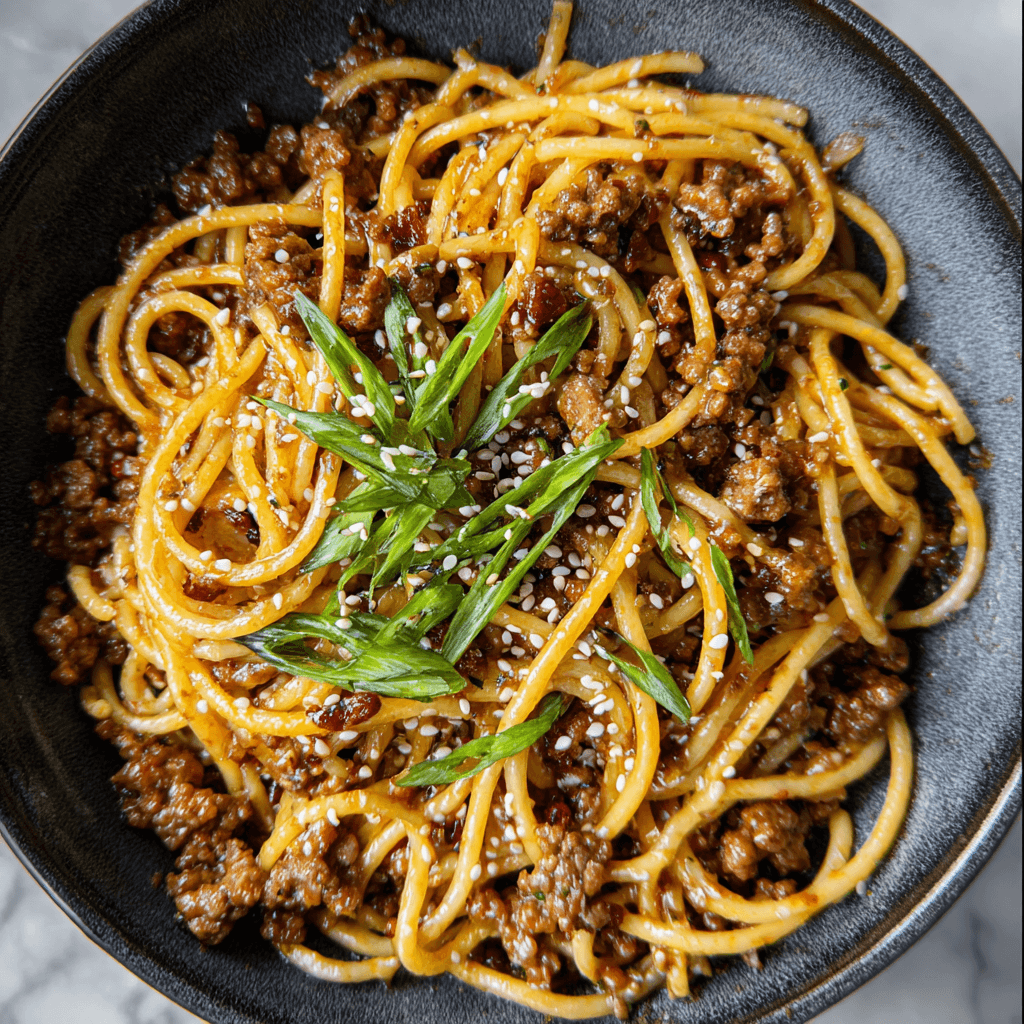
I dumped in twice as many chili flakes because Mia was asking me seventeen questions about butterflies at the exact wrong moment. Ben took one bite, put his fork down, and said, very calmly, “Mom. I can literally feel my ears”. We ate cereal that night. But once I got the heat right, this Asian pasta dish became the most requested dinner in our entire house.
Why This Recipe Is Special
Here is what I love most about this recipe: it looks like something you would order at a restaurant and costs about six dollars to make at home. The sauce is this deep, glossy, savory situation built from pantry staples that come together in the time it takes to boil the pasta. Ground beef soaks up every bit of that garlicky, soy-sesame sauce and clings to the noodles in the most satisfying way. Both kids slurp the noodles completely without shame, and honestly, so do I.
How To Make Asian Pasta Dish
The successful version came together on a rainy Thursday when I had exactly one pound of ground beef, a box of spaghetti, and a strong opinion that we were not ordering pizza again. Mia sat on the counter eating green onion slices straight out of the cutting board pile like they were candy. Ben was testing the chopsticks I had set out for serving, which mostly meant he was flicking them at the counter until I gave him a look. When the sauce hit the pan and the garlic and ginger started doing their thing, the whole kitchen transformed. Mia stopped eating the green onions and just sat there sniffing the air with her eyes closed.
The thing that took this from good to genuinely great was reserving a cup of pasta water before draining. I used to skip this step completely and wonder why my sauce felt a little tight and sticky instead of silky and glossy. The starchy pasta water loosens everything up and helps the sauce coat every single strand evenly. Ben now reminds me every single time I am at the stove. “Did you get the pasta water, Mom?” Yes, buddy. Every time now.
Main Ingredients
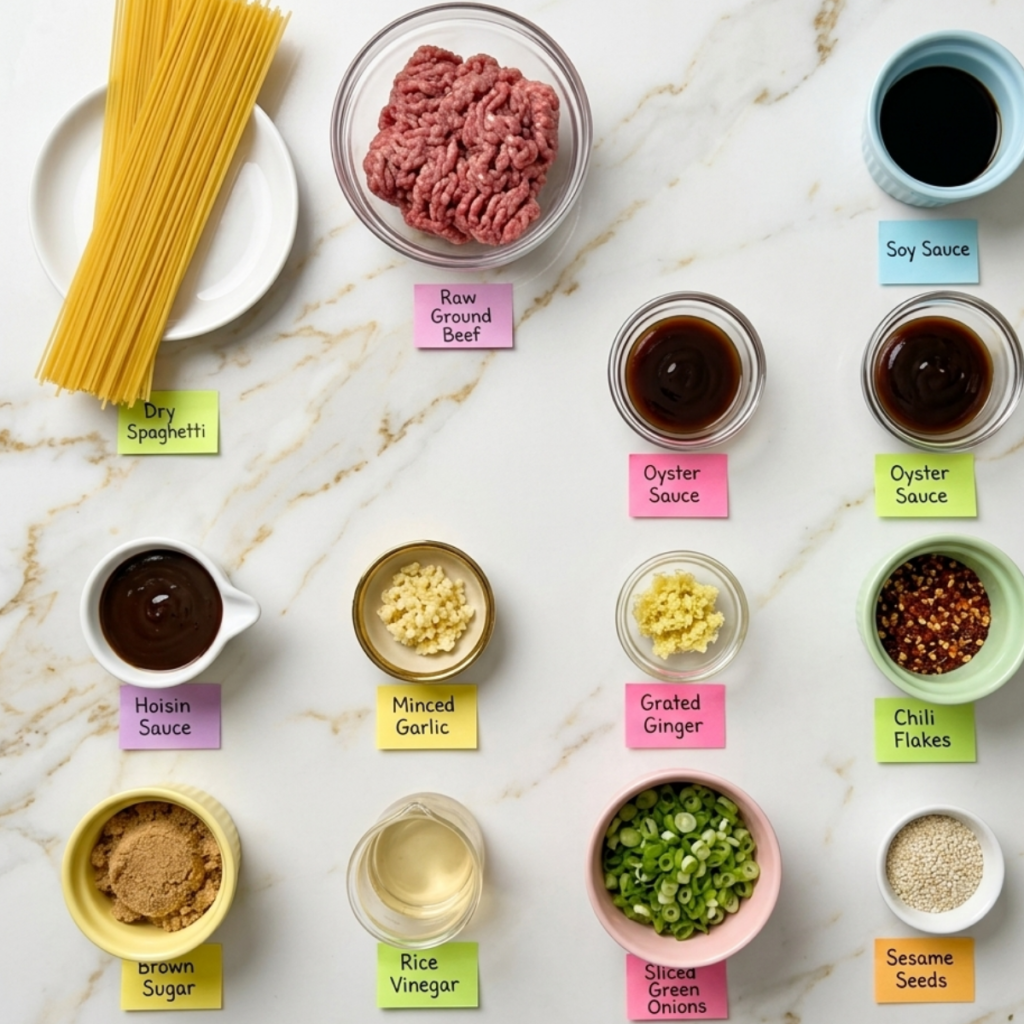
- 12 oz spaghetti – Regular spaghetti works beautifully here; the long strands catch all that glossy sauce perfectly
- 1 lb ground beef (80/20) – The fat in 80/20 carries the flavor; leaner beef works but the sauce will be slightly less rich
- 4 cloves garlic, minced – The backbone of the whole sauce; do not reduce this
- 1 teaspoon fresh ginger, grated – Adds warmth and that unmistakable Asian flavor depth
- 3 tablespoons soy sauce – Saltiness and deep umami; low-sodium works fine
- 2 tablespoons oyster sauce – Thick, sweet, savory and the secret to that glossy restaurant-style coating
- 1 tablespoon sesame oil – Toasted sesame oil only; it goes in at the end for maximum fragrance
- 1 tablespoon hoisin sauce – A little sweet, a little tangy; adds complexity without any extra effort
- 1 teaspoon chili flakes – Start here; add more carefully and not while being asked about butterflies
- 2 tablespoons neutral oil – For browning the beef; vegetable or avocado oil both work
- 1 tablespoon brown sugar – Balances the saltiness and helps the sauce develop that glossy caramelized finish
- 2 tablespoons rice vinegar – Brightens the whole sauce and cuts through the richness
- 3 green onions, sliced – For finishing and garnish; the fresh bite balances the richness of the sauce
- 1 teaspoon sesame seeds – Optional but adds a lovely nutty crunch on top
- 1 cup reserved pasta water – The most important ingredient most people forget; makes the sauce silky
Step-by-Step Instructions
Step 1: Cook the Pasta and Make the Sauce
- Cook the spaghetti in well-salted boiling water until just al dente according to package directions, then scoop out 1 cup of pasta water before draining
- Whisk together the soy sauce, oyster sauce, hoisin sauce, brown sugar, rice vinegar, and chili flakes in a small bowl until fully combined
- Set the sauce bowl and reserved pasta water right next to the stove before you start cooking the beef
- Drain the pasta and toss it with a tiny drizzle of neutral oil to keep it from clumping while you finish the beef
Step 2: Brown the Beef
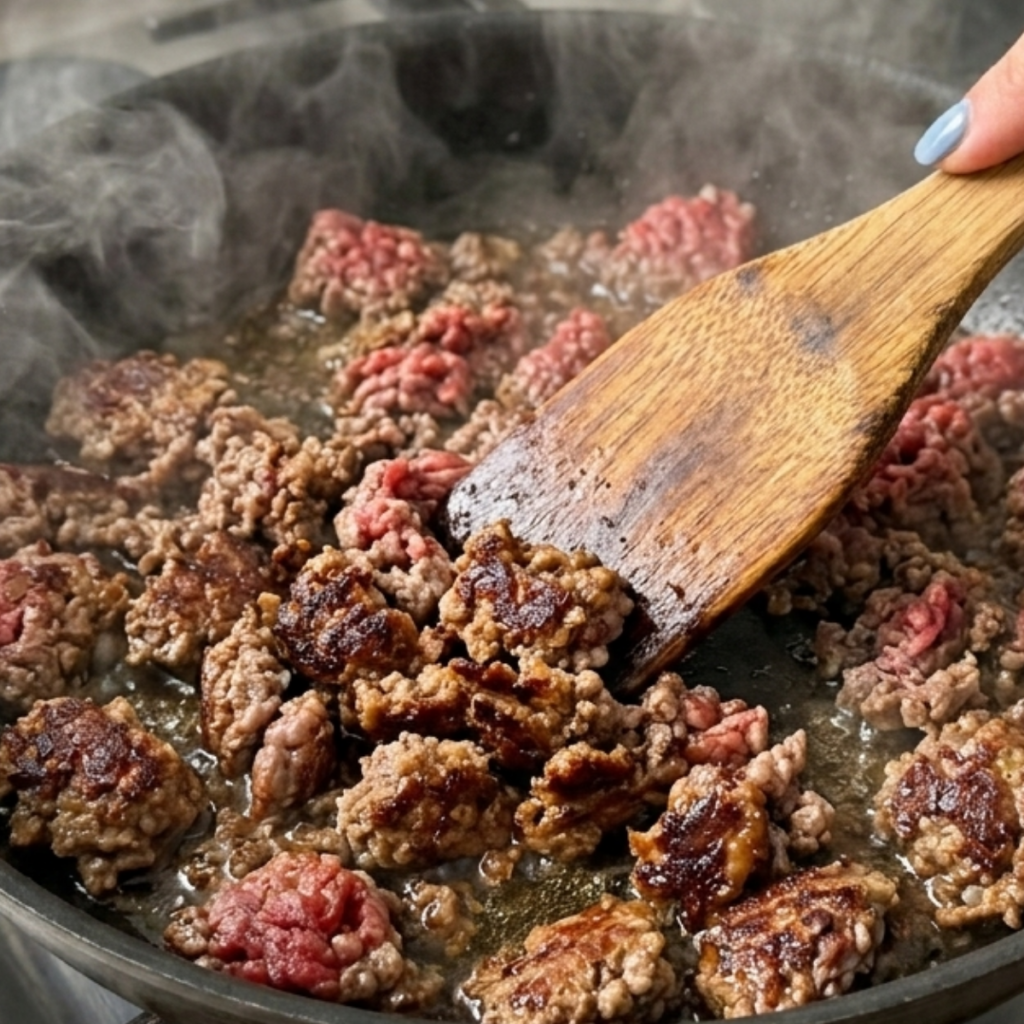
- Heat the neutral oil in a large skillet or wok over medium-high heat until shimmering
- Add the ground beef and spread it out in a single layer; let it cook undisturbed for 2 minutes before breaking it up so it browns instead of steams
- Break the beef into small crumbles and cook until deeply browned with no pink remaining, about 5 to 6 minutes total
- Drain any excess fat from the pan if needed, leaving about 1 tablespoon behind for flavor
Step 3: Build the Sauce
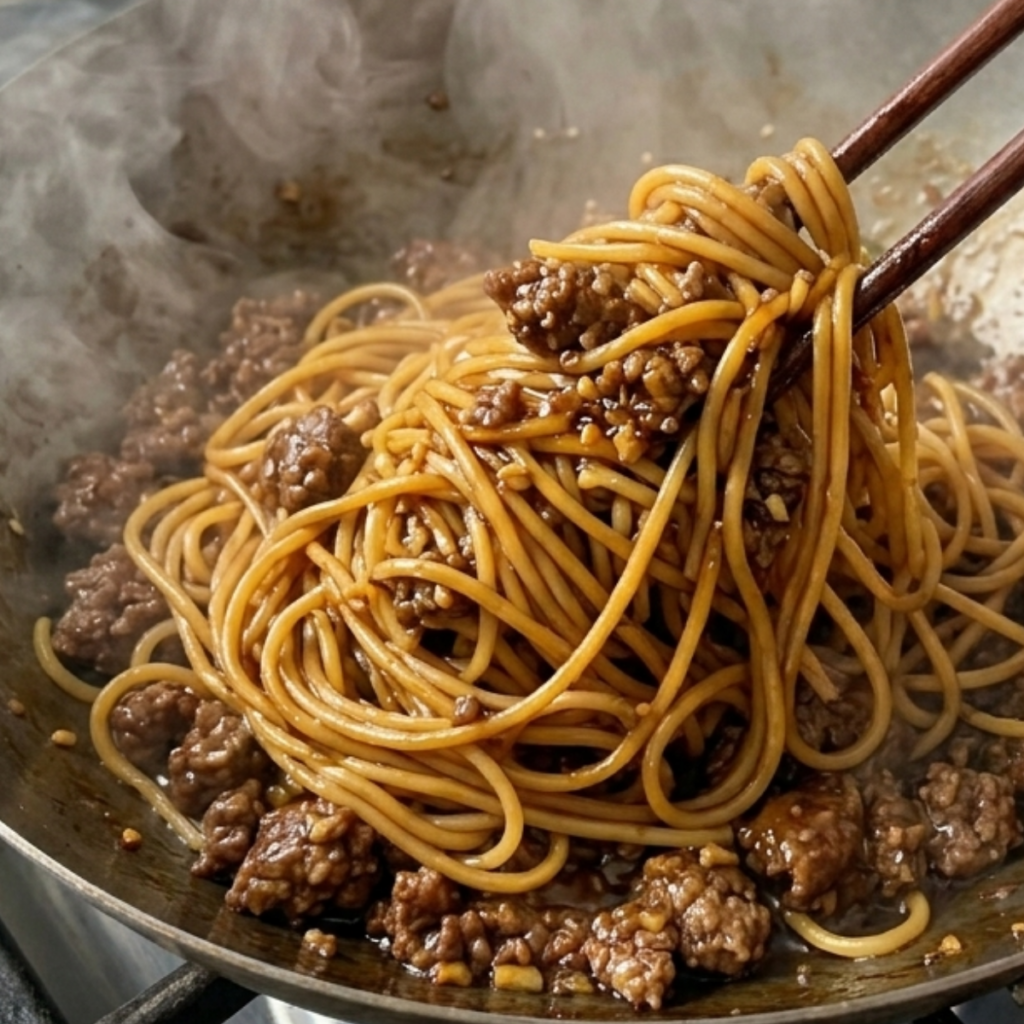
- Push the browned beef to one side of the pan and add the garlic and ginger to the cleared space; stir for 30 seconds until golden and fragrant
- Pour the sauce mixture over the beef and garlic and toss everything together to combine
- Add the drained pasta directly to the pan and toss vigorously to coat every strand in the sauce
- Pour in the reserved pasta water a little at a time, tossing as you go, until the sauce turns glossy and clings to the noodles without pooling at the bottom
Step 4: Finish and Serve
- Remove the pan from the heat and drizzle the sesame oil over everything, then toss once more to distribute it evenly
- Taste the noodles and adjust with a splash more soy sauce for salt or a drop more rice vinegar for brightness
- Divide into bowls and top generously with sliced green onions and a sprinkle of sesame seeds
- Serve immediately while the noodles are still glossy and the sauce is at its silkiest
Asian Pasta Dish Variations
Ben’s “Extra Sauce” Bowl
Ben has one standard for all noodle dishes: there must be enough sauce to pool slightly at the bottom of the bowl so he can dip each forkful into it before eating. For an extra saucy version that fully satisfies the sauce enthusiasts in your family, double the sauce mixture and add an extra half cup of pasta water. The noodles swim in that glossy, savory coating, and every single bite is completely equal in flavor. Ben considers this the correct way to eat noodles, and I have stopped arguing with him.
Mia’s “No Spicy Please” Version
Mia operates a strict no-heat policy in her bowl. She will eat everything else in this dish without complaint, which for a six-year-old is basically a miracle, but the chili flakes are completely non-negotiable. For the spice-free version, simply leave out the chili flakes entirely and add an extra half tablespoon of hoisin sauce to make up for the depth. The dish is still deeply savory and satisfying, and Mia eats the whole bowl without a single negotiation. That alone is worth the small adjustment.
The Pork and Cabbage Upgrade
On the weeks when I want to stretch this into something that feels a little more substantial, I swap the ground beef for ground pork and throw in two cups of thinly shredded cabbage with the garlic and ginger. The cabbage wilts down beautifully and adds a slight sweetness that works incredibly well against the salty, savory sauce. It also makes this one of the best easy Asian pasta recipes for feeding a crowd because the whole pot suddenly goes a lot further without feeling thin or skimped on.
Substitutions
Ground beef to ground pork or chicken: Ground pork is actually the most traditional choice for this style of noodle dish and gives a slightly sweeter, more delicate flavor. Ground chicken works well too but is leaner, so add an extra teaspoon of sesame oil at the end to keep the richness up.
Spaghetti to lo mein noodles or udon: If you can find fresh lo mein or udon at your grocery store, absolutely use them here. They have a chewier texture that makes the whole dish feel more authentically Asian-inspired. Cook them according to package directions and treat them exactly the same as the spaghetti.
Oyster sauce to hoisin sauce: If oyster sauce is not something you keep on hand, use an equal amount of hoisin in its place. The flavor will be slightly sweeter and less briny, so add a small splash of soy sauce to compensate, and the sauce will still be deeply flavorful and glossy.
Fresh ginger to ground ginger: Fresh ginger is worth it here, but in a pinch, use one quarter teaspoon of ground ginger in place of the full teaspoon of fresh. Ground ginger is more concentrated and will deliver the warmth without the bright, sharp bite of fresh ginger, which is a fair trade on a busy weeknight.
Equipment
- Large pot for boiling pasta
- Large skillet or wok (12-inch minimum; wok preferred for tossing noodles)
- Small mixing bowl for the sauce
- Whisk or fork for combining the sauce
- Ladle or heatproof measuring cup for scooping pasta water
- Colander for draining pasta
- Tongs or chopsticks for tossing the noodles
- Microplane or box grater for fresh ginger
- Sharp knife and cutting board for green onions and garlic
- Measuring spoons
Storage Tips
Make Ahead
- The sauce mixture can be whisked together and stored in a sealed jar in the fridge for up to 4 days before you need it
- Brown the beef a day ahead, store it covered in the fridge, and the whole dish comes together in the time it takes to boil the pasta
- Cook the spaghetti slightly under al dente if making ahead since it will absorb more sauce and continue softening as it sits
Refrigerator
- Store leftover noodles in an airtight container in the fridge for up to 4 days
- The noodles will absorb the sauce as they sit in the fridge so the leftovers will be less saucy than when freshly made
- Keep a small splash of soy sauce and water mixed together in a separate container to loosen the noodles back up when reheating
Freezing
- The cooked beef with sauce freezes well for up to 2 months in a freezer-safe container
- Do not freeze the assembled noodles as the pasta texture changes significantly after thawing
- Freeze the beef component separately and cook fresh noodles when you are ready to serve for the best result
Reheating
- Reheat noodles in a skillet over medium heat with a splash of water or soy sauce, tossing constantly until warmed through and glossy again
- Microwave works in a pinch; cover with a damp paper towel and heat in 60-second intervals, tossing between each round
- Add a fresh drizzle of sesame oil right before serving reheated leftovers to bring the fragrance back to life
Family Secret Worth Sharing
My mom always told me that the secret to good noodles is knowing when to take the pan off the heat. She said most people leave it on too long and the sauce tightens up and loses that silky quality that makes noodle dishes genuinely great. The moment the sauce looks just barely glossy and clings to the noodles without feeling dry, that is the exact second to pull it. I think about that every single time I stand at this pan. Mia asked me once why I always stare at the noodles so seriously right before serving. I told her I was listening to them. She looked at me for a long moment and then said “okay” and went back to eating. That felt like the right answer.
Troubleshooting FAQs
Why are my noodles clumping together instead of staying separate?
This almost always happens when the pasta sits too long after draining without anything to keep it moving. Toss the drained pasta immediately with a tiny drizzle of neutral oil, and get it into the pan with the sauce as quickly as possible. Working fast is the real trick with noodle dishes; the sauce separates the strands and keeps everything loose once everything comes together.
My sauce is too salty. How do I fix it?
Add a teaspoon of rice vinegar and a pinch of brown sugar to balance it out. A squeeze of fresh lime juice also works beautifully. If it is still too salty, add a small splash of plain water and toss the noodles well so the dilution distributes evenly through the whole pan.
The beef came out gray and steamed instead of browned. What went wrong?
The pan was not hot enough or the beef was too crowded. Ground beef releases a lot of moisture as it cooks, and if the pan is not hot enough to evaporate that moisture quickly, the beef ends up steaming in its own liquid. Make sure the oil is shimmering before the beef goes in, and leave it undisturbed for the first 2 minutes so a proper crust can form before you break it up.
Can I make this dish without oyster sauce?
Absolutely. Replace it with an equal amount of hoisin sauce plus a small splash of soy sauce to add back the salty depth. The flavor will be slightly sweeter and less complex but still deeply satisfying. Worcestershire sauce is also a surprising substitute in a pinch, adding a similar savory, slightly sweet depth that works well with the rest of the sauce components.
Noodle Night Is Now a Thing in Our House
Thursday nights used to mean scrambled eggs or cereal when I ran out of dinner ideas. Now they mean noodles, chopsticks that Ben still cannot quite figure out, and Mia insisting on eating hers in the biggest bowl we own. This has become one of our favorite easy weeknight dinners right alongside our pineapple chicken and rice that gets just as many requests on a Friday. On the nights when I want something equally fast but with ground beef doing the heavy lifting, our hobo casserole ground beef recipe is always there for me. And if you are on a one-pan weeknight kick like we are, you absolutely cannot miss this easy one pot chicken and rice recipe that has saved us more Thursdays than I can count. Some recipes just quietly become part of your family without you even planning it, and this one did exactly that for us.
Don’t forget to snap a picture of your Asian pasta dish before that… (trust me, it will disappear quickly!), and leave a rating below. We’d love to hear how this Asian pasta dish becomes part of your family dinner story.