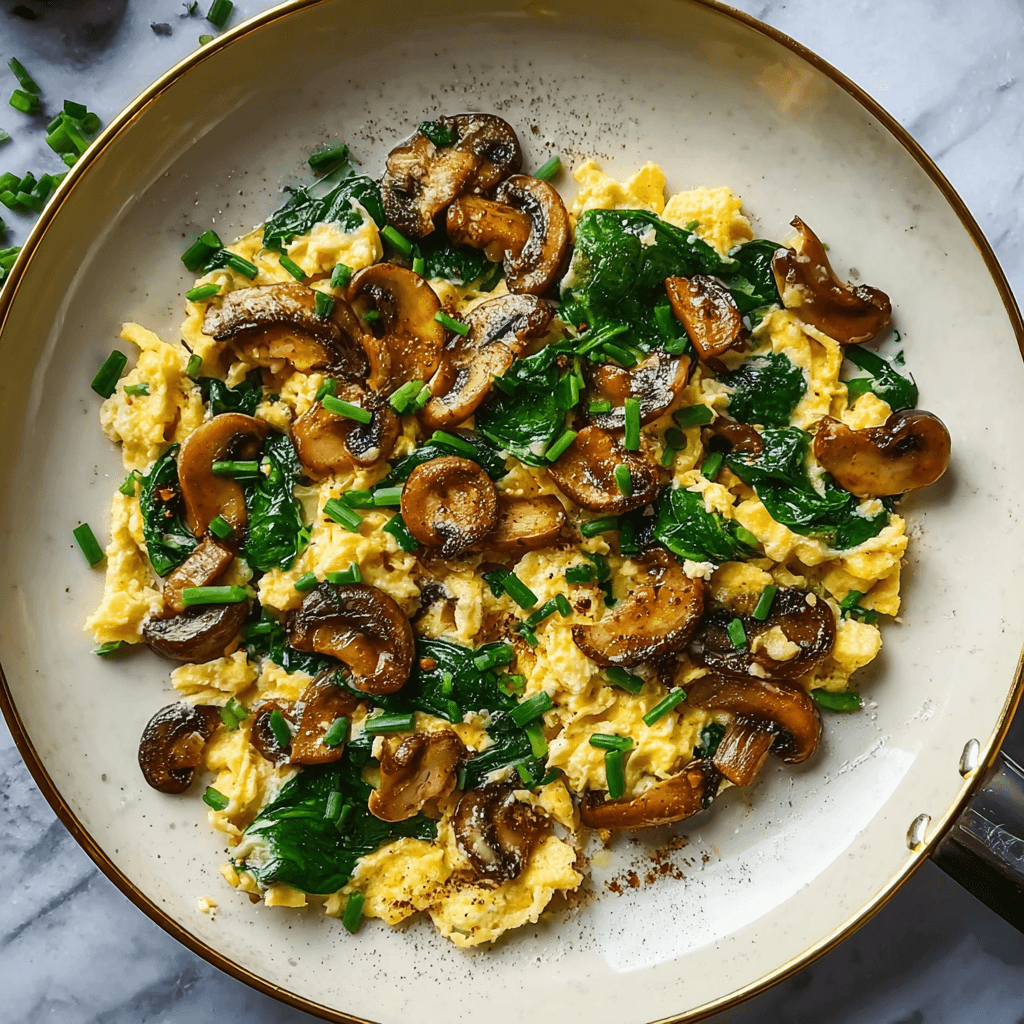
I had the heat too high and stirred too fast and produced what Ben described as “yellow bouncy bits.” He was nine and he was completely correct. Mia flatly refused to eat them on principle. I stood there staring at the pan, made them again slowly, and absolutely everything changed. These mushroom spinach scrambled eggs are now the most requested breakfast in our entire house.
Why This Recipe Is Special
Most scrambled eggs are fine. These are genuinely good. The mushrooms get properly golden before anything else goes in, which gives the whole dish a deep savory base that plain scrambled eggs simply do not have. The spinach wilts into the eggs in the last thirty seconds and adds color and freshness without making things soggy. The eggs themselves, cooked low and slow, come out in those big, soft, glossy curds that feel like something a restaurant actually tried to make. Ben calls them “fancy eggs” and requests them on school mornings, which tells you everything.
How To Make Mushroom Spinach Scrambled Eggs
The version that worked happened on a quiet Saturday when I had more time and less coffee-fueled impatience than usual. Mia was sitting on the counter eating mushroom slices straight from the cutting board before I could stop her. Ben was cracking the eggs into the bowl with excessive confidence and getting shell in approximately thirty percent of them. When the mushrooms hit the hot pan and that deep buttery, earthy smell went through the kitchen, Mia stopped eating them raw and said “okay that smells better than eating them plain.” High bar. She cleared it.
The lesson that changed everything was learning that scrambled eggs and mushrooms need to be cooked separately before they come together. If you throw the eggs in with uncooked mushrooms, the mushrooms release water, the eggs cook in that liquid, and you get watery, rubbery eggs every single time. Golden mushrooms, first completely done, are set aside; eggs are cooked alone on low heat, then everything comes together at the very end. Ben watched me do it this way once and said “oh, that is actually a different recipe.” It is the same recipe. It is just done right.
Main Ingredients
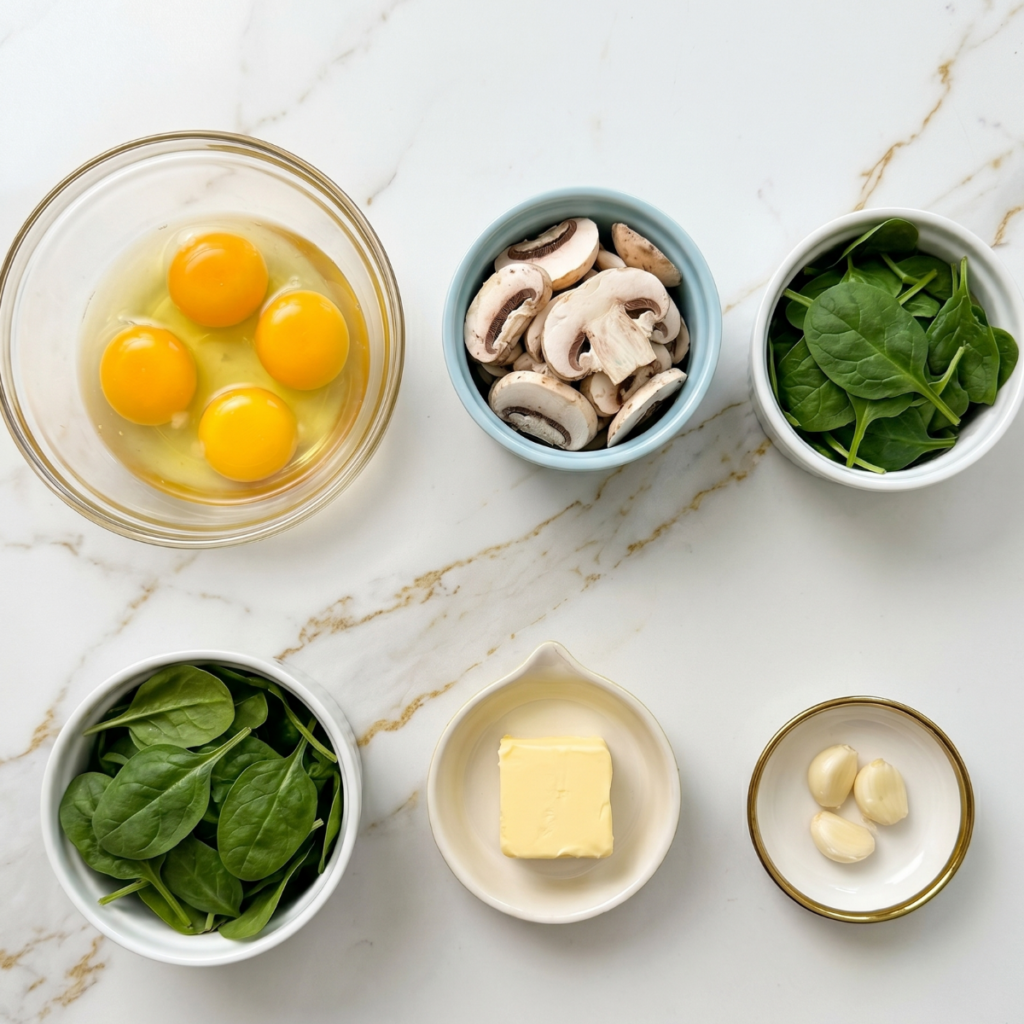
- 4 large eggs – The base; crack them into a bowl and whisk well before they go anywhere near the pan
- 1.5 cups cremini or button mushrooms, sliced – Cremini have a deeper flavor than white button; slice them evenly so they cook at the same rate
- 2 cups fresh baby spinach – Goes in at the very end; it wilts down dramatically so use more than you think you need
- 2 tablespoons unsalted butter, divided – One tablespoon for the mushrooms, one for the eggs; butter gives a richness that oil alone cannot match
- 2 tablespoons whole milk or cream – Whisked into the eggs before cooking for the creamiest, softest curds
- 2 cloves garlic, minced – Added to the mushrooms; gives the whole dish its savory backbone
- Salt and black pepper to taste – Season the mushrooms as they cook and the eggs just before they set
- 1/4 teaspoon red pepper flakes – Optional but adds a gentle warmth that lifts the whole dish; leave out for the kids’ version
- Fresh chives or parsley, chopped – For garnish; adds a fresh finish that makes the whole plate look intentional
Step-by-Step Instructions
Step 1: Whisk the Eggs
- Crack the eggs into a medium bowl and add the milk or cream, a pinch of salt, and a few cracks of black pepper
- Whisk vigorously for about 60 seconds until the yolks and whites are completely combined and the mixture looks uniform in color with small bubbles on the surface
- The more air you whisk in at this stage the fluffier and lighter the final curds will be, so do not rush this step
- Set the whisked eggs aside at room temperature while you cook the mushrooms; do not add them to a cold pan straight from the fridge
Step 2: Cook the Mushrooms
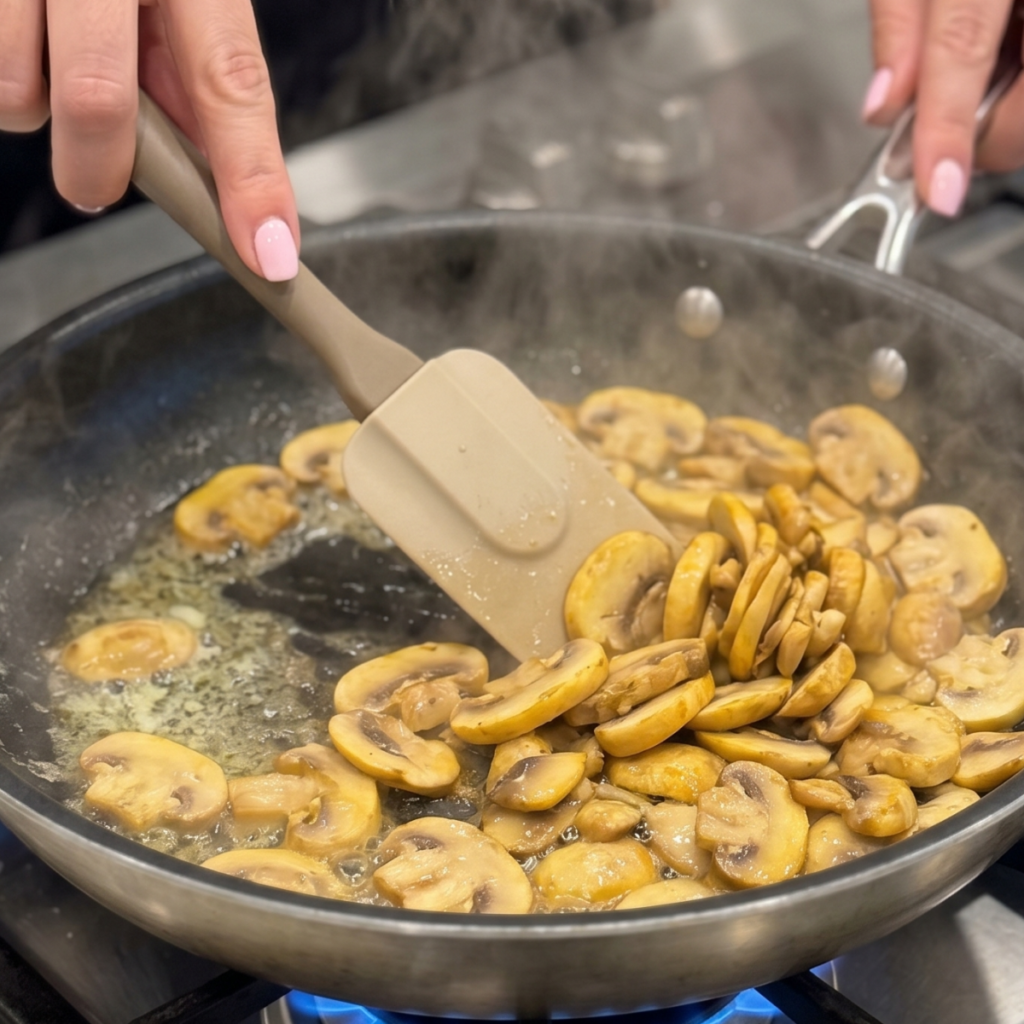
- Heat one tablespoon of butter in a large non-stick skillet over medium-high heat until the butter foams and just starts to turn golden
- Add the sliced mushrooms in a single layer and cook without stirring for 2 to 3 minutes until the undersides are deeply golden and they have released most of their moisture
- Stir once, add the minced garlic and red pepper flakes if using, and cook for another minute until the garlic is fragrant and the mushrooms are golden all over
- Season generously with salt and pepper, then transfer the mushrooms to a plate and set aside while you cook the eggs in the same pan
Step 3: Scramble the Eggs Low and Slow
- Reduce the heat to low and add the remaining tablespoon of butter to the same skillet; let it melt gently without browning
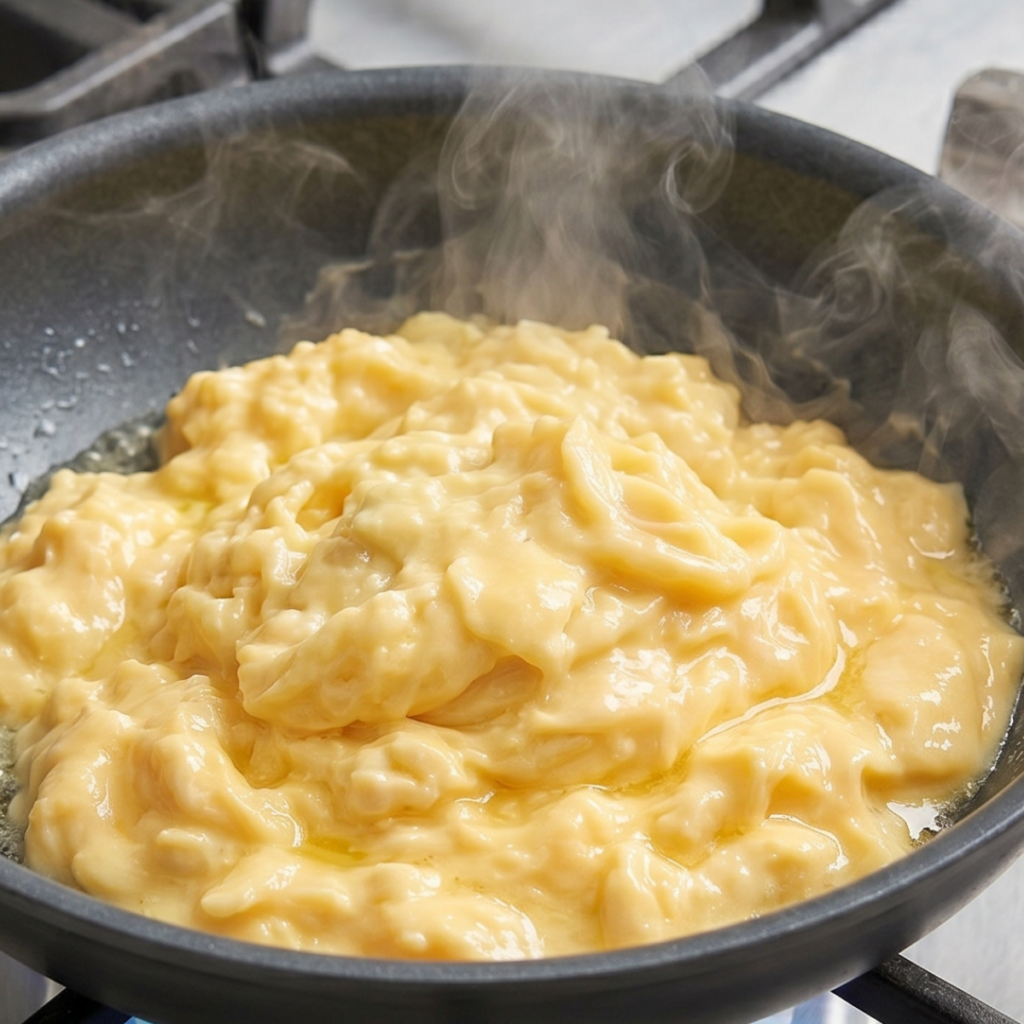
- Pour in the whisked eggs and let them sit undisturbed for about 20 seconds until just the edges begin to set
- Using a rubber spatula, push the eggs slowly from the edges toward the center in large, gentle sweeping strokes; do not stir quickly or constantly
- Continue the slow fold-and-push method for 2 to 3 minutes until the eggs are in large soft glossy curds and still look slightly underdone; they will finish cooking from residual heat
Step 4: Add Spinach, Finish, and Serve
- Add the fresh baby spinach directly to the eggs in the pan and fold it in gently; the residual heat will wilt it in about 30 seconds without overcooking the eggs
- Return the golden mushrooms to the pan and fold everything together with one or two gentle turns so the mushrooms are distributed without breaking up the egg curds
- Remove the pan from the heat immediately and season with a final pinch of salt and pepper; the eggs will continue to firm up slightly as they sit
- Plate immediately, garnish with fresh chives or parsley, and serve with toast, crusty bread, or alongside whatever else makes the morning feel good
Mushroom Spinach Scrambled Eggs Variations
Ben’s “Add Cheese to Everything” Version
Ben has a standing rule that any egg dish is improved by cheese and he has never once been wrong about this. For his version, fold two tablespoons of grated parmesan or sharp cheddar into the eggs during the last 30 seconds of cooking, right before the spinach goes in. The cheese melts into the curds and adds a slightly salty, savory richness that makes the whole plate feel more substantial. Ben describes this version as “the actual good one,” which I choose not to take personally since he eats two servings every time.
Mia’s “No Mushrooms, Extra Spinach” Version
Mia went through a phase of refusing mushrooms entirely based on their texture, which she described as “too wet and too loud.” I did not fully understand the loud part, but I respected the position. For her version, skip the mushrooms entirely and double the spinach, adding it in two batches so it wilts fully without releasing too much liquid at once. A tiny pinch of nutmeg in the eggs gives her version a subtle warmth that she cannot identify but always eats without complaint. She has never asked what it is, and I have never offered the information.
The High-Protein Meal Prep Version
On the Sundays when I want the whole week’s breakfasts sorted in twenty minutes, I make a triple batch of the mushroom and spinach mixture, store it in the fridge, and just cook fresh eggs each morning with a scoop of the pre-cooked filling. The vegetables hold beautifully for four days, and fresh eggs take two minutes. This is one of the best prep meal ideas I have come across for busy weekday mornings when the kids need a real breakfast before school and nobody has time to cook something properly from scratch.
Substitutions
Cremini mushrooms to portobello or shiitake: Portobello mushrooms have a meatier texture and stronger flavor that makes the dish feel even more substantial. Shiitake adds an earthy, almost smoky quality that pairs beautifully with the eggs. Both need a slightly longer cook time than cremini, so give them an extra minute in the pan before adding the garlic.
Fresh spinach to frozen spinach: Frozen spinach works in a time crunch but must be completely thawed and squeezed very dry before it goes into the pan. Excess moisture from frozen spinach will make the eggs watery in exactly the same way that undercooked mushrooms do. When properly drained, it tastes nearly identical to fresh and is a perfectly good weekday shortcut.
Butter to olive oil or ghee: Olive oil gives a slightly more savory, less rich result that works well for anyone avoiding dairy. Ghee has an even higher smoke point than butter and adds a slightly nutty quality that is genuinely lovely with the mushrooms. Or substitutes in the exact same quantity with almost no change to the final dish.
Whole milk to oat milk or no liquid at all: A small splash of oat milk works as a dairy-free swap and gives a similar creamy texture to the eggs. Leaving the liquid out entirely is also a perfectly valid option; the eggs will be slightly less fluffy and a little firmer but still delicious. Some people prefer their scrambled eggs without any liquid, and this recipe works both ways.
Equipment
- Large non-stick skillet (10 to 12-inch; non-stick is important for low-heat scrambling without sticking)
- Medium mixing bowl for whisking the eggs
- Whisk or fork for combining the eggs and milk
- Rubber spatula (not a metal spoon or wooden spoon; rubber gives the gentlest fold)
- Sharp knife and cutting board for the mushrooms and garlic
- Plate for resting the cooked mushrooms while the eggs cook
- Measuring spoons for the butter and seasoning
Storage Tips
Make Ahead
- Cook the mushroom and spinach mixture up to 4 days ahead and store in a sealed container in the fridge; reheat briefly in the pan while the fresh eggs cook
- Whisk the egg mixture (eggs plus milk and seasoning) up to 24 hours ahead and store covered in the fridge; give it a quick re-whisk before using
- This is one of the best quick-to-go breakfast ideas for weekday mornings when prep has been done the night or weekend before
Refrigerator
- Store leftover cooked scrambled eggs in an airtight container in the fridge for up to 2 days; scrambled eggs do not hold as well as other dishes but are still perfectly good reheated
- Store the mushroom and spinach filling separately from the eggs if possible for the best texture when reheating
- Do not press the eggs flat in the container; leave them loosely packed so the curds do not compress and turn dense
Freezing
- The cooked mushroom and spinach mixture freezes well for up to 1 month; freeze in individual portions for easy single-serve breakfasts
- Cooked scrambled eggs can be frozen but the texture changes noticeably; they become slightly watery and grainy on thawing, which most people find acceptable for a quick weekday breakfast
- Thaw frozen portions overnight in the fridge and reheat gently in a skillet rather than the microwave for the best texture recovery
Reheating
- Reheat leftover scrambled eggs in a non-stick pan over the lowest possible heat, stirring gently, just until warmed through; high heat will make them rubbery
- Microwave reheating at 50 percent power in 20-second bursts works in a pinch; stir between each burst and stop the moment the eggs are just warm
- A tiny extra knob of butter added to the pan when reheating refreshes the richness and brings the eggs back closer to their original texture
Family Secret Worth Sharing
My mom had one rule about scrambled eggs that she repeated every single time anyone made them in her kitchen: take them off the heat before you think they are ready. She said eggs keep cooking for thirty seconds after the pan is off the stove, and the people who make rubbery eggs are always the ones who wait too long. She was right about this in the same way she was right about most things in the kitchen. I pull mine when the curds are still slightly glossy and just a touch underdone, and they are perfect by the time they hit the plate. Ben watched me do this once and asked why I was stopping early. I told him Grandma’s rule. He nodded, took a bite, and said, “Grandma understood eggs.” She really did.
Troubleshooting FAQs
My scrambled eggs keep coming out rubbery and dry. What am I doing wrong?
Two things cause rubbery eggs every single time: too high a heat and cooking them too long. Scrambled eggs need low heat and patient, slow folding. The moment you feel tempted to turn up the heat because it is taking too long, resist it. Pull the eggs off the heat when they still look slightly underdone and let residual heat finish the job. The thirty-second rule from the family secret section is the most important thing in this whole recipe.
The mushrooms are releasing a lot of water and going soggy instead of golden. How do I fix it?
Do not crowd the pan and do not stir too early. Mushrooms need space and undisturbed contact with a hot surface to develop color. If you pack them in too tightly, they steam in each other’s moisture and go grey and soft. Cook them in a single layer, leave them alone for the first 2 to 3 minutes, and only stir once they have a visible golden color on the bottom. If your pan is not large enough, cook them in two batches.
The spinach made my eggs watery. What went wrong?
The spinach went in too early or the heat was too high when it was added. Fresh baby spinach wilts extremely quickly from residual heat alone and does not need any additional cooking time. Add it to the eggs after the pan comes off the heat, fold it in, and serve immediately. If spinach sits in a hot pan for more than 30 to 40 seconds, it releases liquid that makes the whole dish wet.
Can I make this recipe with just egg whites?
Yes, with one small adjustment. Egg whites cook faster than whole eggs and have less fat to slow the cooking process, so they set more quickly and go rubbery more easily. Use a slightly lower heat than you would for whole eggs and remove them from the heat even earlier. Two tablespoons of cream or a small knob of cream cheese folded in helps compensate for the missing richness from the yolks.
The Breakfast That Finally Made Mornings Worth Getting Up For
There is something about a pan of properly made scrambled eggs that makes a Tuesday morning feel like it was planned with intention rather than survived on autopilot. Ben eats his with toast and a level of focused satisfaction that he usually reserves for video games. Mia eats hers slowly, which is how you know she is genuinely enjoying something. These mushroom spinach scrambled eggs sit naturally right alongside our healthy high-protein breakfast ideas as one of the most filling and genuinely nourishing starts to the day, and on the mornings when I want something equally easy but with a completely different flavor, our healthy carrot juice recipe alongside these eggs makes the whole morning feel properly taken care of. For the weeks when I am meal prepping seriously and want everything sorted in one go, this recipe alongside our keto chicken broccoli recipe covers breakfast and dinner in one prep session, and the whole week runs smoother. Some mornings are just better than others, and this recipe is a good reason why.